Myth, Map, and Spin: How the World's Greatest Legends Became Your Favorite Slot Games

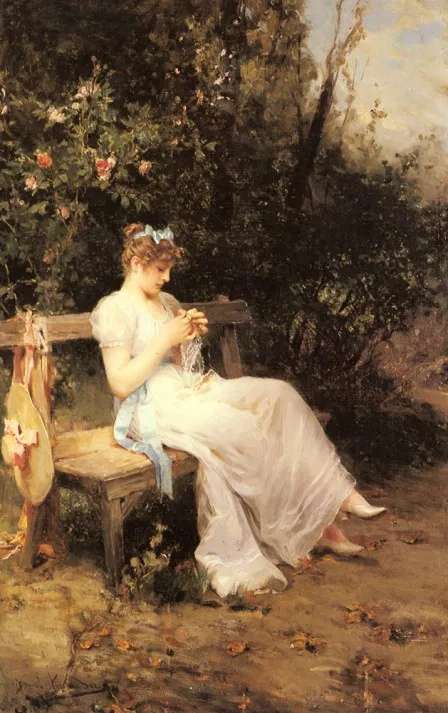
Photo: ChvhLR10, CC BY-SA 3.0, via Wikimedia Commons
Long before anyone invented a random number generator, people gathered around fires to hear stories about the sea. About gods who tested sailors. About prophets who could read the future in the stars. About creatures lurking at the edges of known maps, where cartographers simply wrote: here be dragons.
Those stories never went away. They just found a new medium.
Walk through the lobby of any major online casino today and you'll find those same myths dressed in HD animation, complete with cinematic soundtracks and bonus rounds triggered by the appearance of ancient symbols. The connection between cultural legend and casino game design isn't a coincidence — it's one of the most deliberate and psychologically sophisticated choices the gaming industry makes. And for players across the US, it's a big part of why certain games feel genuinely alive in a way that a plain fruit machine never could.
The Name in the Game
Bandarra. If you've spent any time with the brand behind this site, you've probably wondered about the name. It's a reference to Gonçalo Annes Bandarra, a 16th-century Portuguese cobbler-turned-prophet whose cryptic poems — called trovas — were said to predict the fate of kings and empires. He became a mythic figure in Portuguese culture: the humble craftsman who could see what royalty could not.
There's something poetic about that origin story finding its way into an online casino brand. Bandarra's legend was built on the idea that hidden patterns exist in the world — that if you look closely enough, meaning reveals itself. Sound familiar? That's exactly the psychological hook that well-designed slot games exploit, in the best possible way.
The Dewi in the name adds another layer. In Indonesian and Balinese tradition, Dewi refers to a goddess — often Dewi Sri, the rice goddess associated with fertility, cycles, and fortune. Two mythological traditions, half a world apart, meeting at the same table. That's the essence of what great culturally-rooted game design tries to do.
Why Mythology Makes Better Games
Game developers aren't reaching for ancient legends out of laziness or nostalgia. There's real craft behind the choice.
Myth gives designers what blank-canvas games can't: a built-in emotional framework. When you see Thor's hammer appear as a wild symbol, you don't need a tutorial to understand that something powerful just happened. When an Egyptian eye of Horus triggers a free spin sequence, the iconography carries centuries of accumulated meaning. Players arrive at these games pre-loaded with associations — mystery, power, fate, fortune — that pure abstraction can never manufacture from scratch.
For US players specifically, this matters because the American market is extraordinarily diverse. A slot built around Aztec mythology resonates with players who have Latin American heritage. Norse themes connect with players from Scandinavian-American communities in the Midwest. Asian-inspired games featuring dragons, koi fish, and jade symbols speak to the fastest-growing demographic in American gaming. The best developers understand that cultural authenticity — even when filtered through entertainment — creates loyalty that generic themes simply don't.
Legends That Shaped the Reel
Let's get specific about where mythology shows up in game design, because the breadth of it is genuinely impressive.
Greek and Roman mythology remains the most saturated category in the slot market, and for good reason — these stories are deeply embedded in Western consciousness. Zeus, Medusa, Poseidon, and Athena appear across dozens of titles. But the better-designed games go beyond the famous names. They pull in lesser-known figures — Aeolus, the keeper of winds; Tyche, goddess of fortune — and build mechanics around those specific narratives.
Norse mythology had a massive resurgence thanks in part to popular culture, but slot designers were ahead of the curve. Yggdrasil — the world tree connecting nine realms — became both a game theme and, notably, the name of one of the industry's most respected game development studios. The symbolism was deliberate.
East and Southeast Asian traditions bring a different aesthetic vocabulary: flowing water, bamboo, celestial dragons, the concept of qi and energy flow. These aren't just visual choices — they inform game mechanics. Cascading reels, for instance, mirror the Taoist idea of continuous flow and renewal far better than the hard stop of a traditional spin.
Indigenous American and Mesoamerican traditions are handled with varying degrees of care across the industry. The best implementations involve cultural consultation and genuine storytelling. The worst are surface-level appropriation. Players are increasingly sophisticated enough to notice the difference, and developers who invest in authentic representation tend to build longer-lasting franchises.
The Psychology of the Familiar Unknown
There's a concept in aesthetics called the uncanny valley — the unsettling feeling when something is almost-but-not-quite human. Mythology in game design works in almost the opposite direction: the familiar sublime. These stories feel ancient and powerful, yet somehow personal. You've heard versions of them before, even if you can't quite remember where.
That feeling of recognition is enormously effective in gaming contexts. It lowers the cognitive barrier to engagement. You don't have to learn the world from scratch — you arrive with intuitions. And when the bonus round triggers and the prophet's symbols align on the grid, the payoff feels earned in a way that pure randomness never quite achieves.
Bandarra's own legend carries exactly this quality. The idea of a humble figure who sees patterns others miss — and is both celebrated and feared for it — is a story template that appears in cultures from Japan to West Africa to pre-colonial Americas. It's universal because it's true to something in human experience: the belief that luck isn't entirely random, that attention and intuition matter, that the person who watches carefully gains an edge.
What Players Can Take From This
Understanding why mythology works in game design actually makes you a more intentional player. When you recognize that a game's theme is doing deliberate psychological work — building anticipation through familiar story beats, using cultural symbolism to signal reward — you can appreciate the craft without being entirely swept up in it.
The stories are real. The legends that inspired these games carry genuine human wisdom about chance, fate, courage, and fortune. But the games are games. The best way to honor both the mythology and your own experience is to engage with full awareness: enjoy the storytelling, respect the math, and play within limits that keep the whole thing fun.
Where luck meets legends, as we like to say — the key word is meets. They're two different things, and knowing which is which is its own kind of wisdom.