From Bali to the Betting Table: How Southeast Asian Decision-Making Is Reshaping the Way Americans Play Casino Games
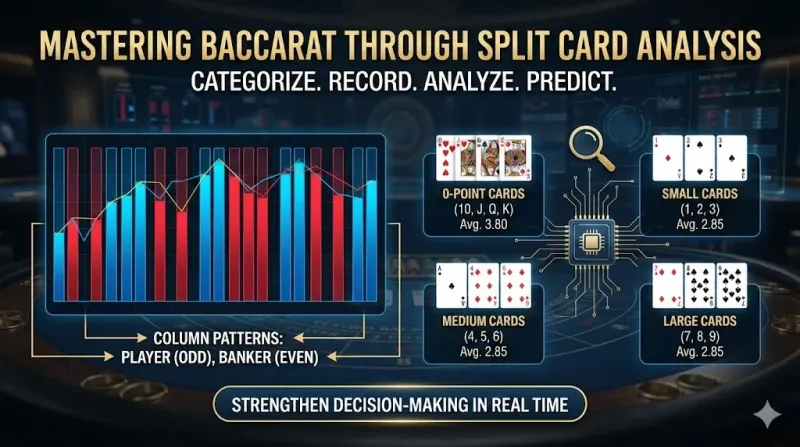
Photo: Asian casino strategy cards baccarat scorecard disciplined player, via www.phbestcasinos.com
For a long time, the American approach to casino gaming could be summed up in one word: feel. You ride a hot streak. You trust your gut. You double down because something in your chest says go. It's a style shaped by decades of Vegas mythology — the cowboy instinct, the riverboat gambler's swagger, the idea that boldness itself is a strategy.
But something is shifting. Quietly, without much fanfare, a different school of thought is making its way into US gaming culture. It comes from the gambling communities of Southeast Asia — from the card rooms of Manila, the casino floors of Macau, and the informal betting circles that have existed in countries like Vietnam, Thailand, and Indonesia for generations. And the American players who've started borrowing from it? They're not going back.
The Western Way vs. The Eastern Framework
Before we get into the specifics, it helps to understand the core philosophical gap between the two approaches.
Western casino strategy — at least at the recreational level — tends to be reactive. Players respond to what's happening in the moment. A card comes up wrong, they adjust. A slot pays out twice in a row, they up their bet. There's a heavy reliance on narrative: the idea that a session has momentum, that wins cluster, that you can feel when a game is running hot.
Southeast Asian gambling philosophy, by contrast, is rooted in something closer to systems thinking. The emphasis isn't on reading the energy of a session — it's on building a decision-making structure before you sit down and sticking to it regardless of what the cards do. Emotion isn't the enemy exactly, but it's treated as a variable that needs to be managed, not a compass to follow.
Marco T., a poker player from Phoenix who spent three years living in the Philippines before returning to the US, puts it plainly: "Over there, the serious players I knew didn't talk about hot streaks. They talked about process. They'd map out their session in advance — buy-in limits, exit conditions, specific bet sizing rules. The game almost didn't matter. The framework was the thing."
Pattern Recognition as a Discipline
One of the most transferable elements of Southeast Asian casino strategy is an almost obsessive attention to pattern recognition — not in the superstitious sense, but as a methodical practice.
In games like baccarat, which remains enormously popular across Southeast Asia, experienced players keep detailed scorecards tracking outcomes across dozens of hands. This isn't because they believe the cards have memory (they don't), but because the exercise of tracking forces a kind of active engagement that prevents impulsive decision-making. You're not just watching the game — you're documenting it. And documentation creates a buffer between impulse and action.
American players who've adopted this habit describe a similar effect. "I started keeping a basic log of my sessions — not to predict outcomes, but just to stay honest with myself," says Dani R., a blackjack player from Atlanta who discovered the practice through an online community. "Once I started writing things down, I noticed how often my 'gut feelings' were just emotional reactions to the last three hands. The log made me slower. Slower turned out to be better."
The Pre-Session Ritual
Another concept gaining traction among American players is what some Southeast Asian gamblers call the preparation window — a deliberate period before any session where you set your parameters, check your mental state, and commit to your exit rules in writing or out loud.
This might sound overly formal for a casual gaming session, but the logic is sound. Decisions made before you're emotionally invested in an outcome are almost always more rational than decisions made mid-session when you're down a hundred dollars and itching to recover. The pre-session ritual essentially forces you to negotiate with your future, more stressed self.
At Bandarra Dewi Casino, this kind of intentional play isn't just encouraged — it's baked into the experience. The platform's design philosophy leans into the idea that gaming should feel purposeful, not frantic. That's not an accident. It reflects the same cultural current that's pushing these Eastern frameworks into American consciousness.
Bankroll as a Sacred Variable
If there's one area where the Southeast Asian influence is most immediately practical, it's bankroll management — specifically, the concept of treating your session budget as a fixed, almost sacred number rather than a flexible guideline.
In many Western gaming contexts, the buy-in is more of a starting point than a limit. Players rebuy, chase losses, and mentally reframe their total exposure as the session progresses. Southeast Asian gambling culture — particularly in communities where gaming has been a multigenerational practice — tends to treat the session bankroll as a hard ceiling. Once it's gone, the session is over. Full stop.
This isn't just discipline for discipline's sake. It reflects a deeper understanding of variance. No single session is representative of your skill or your luck. The only way to stay in the game long enough to let positive variance work in your favor is to protect your ability to come back tomorrow. Burning through three buy-ins in a night doesn't just cost money — it costs future sessions.
"The guys I learned from in Vietnam talked about the bankroll like it was a living thing," says James K., a sports bettor from Chicago who's been applying these principles to his online gaming habits for the past two years. "You don't exhaust it. You tend to it. That framing completely changed how I approached sessions."
Why Now? Why America?
It's worth asking why this cultural crossover is happening now, and why it seems to be resonating particularly with American players.
Part of it is simply exposure. The rise of global online gaming platforms has put American players in direct contact with strategies and communities they'd never have encountered in a brick-and-mortar Vegas casino. Forums, Discord servers, and streaming platforms have flattened the geographic barriers that once kept these approaches siloed.
But there's also something generational happening. Younger American gamblers — particularly those who came of age watching their parents ride the 2008 financial crisis — are skeptical of the "trust your gut" mythology in a way their predecessors weren't. They've seen what happens when instinct substitutes for structure. They're looking for frameworks, not folklore.
Southeast Asian casino strategy, with its emphasis on systems, preparation, and emotional discipline, speaks directly to that skepticism.
Taking It to the Table
You don't need to overhaul your entire approach overnight. Start small. Before your next session, write down three things: your buy-in limit, the condition under which you'll walk away up, and the condition under which you'll walk away down. Then honor those commitments like they were made to someone else.
Track your sessions, even loosely. Notice patterns in your own decision-making — not in the cards, but in yourself. Where do you tend to get reckless? What triggers a chase? That self-knowledge is the real edge.
The legends that power Bandarra Dewi Casino aren't just mythological — they're strategic. They're about playing a longer, smarter game. And if Southeast Asian gambling culture has anything to teach American players, it's exactly that: luck favors those who show up prepared.